
A dental implant replaces both the root and the crown of a missing tooth, which is why it tends to feel and function more like a natural tooth than a bridge or denture.
The process starts with a scan to check bone density and plan the exact position of the implant — this planning stage matters as much as the surgery itself for a good long-term result.
Placing the titanium post is a same-day procedure under local anesthesia, but the bone needs time to fuse around it — usually a few months — before it's strong enough to support a crown.
During that healing period, mild swelling or tenderness for a few days is normal, and most people return to regular activity within a day or two.
Once healing is confirmed, a custom crown is attached to the implant, matched to the shade and shape of your surrounding teeth, completing the replacement.
Have a question about this?
Book a consultation and get answers specific to your situation.
Book AppointmentMore from the blog
 Treatments
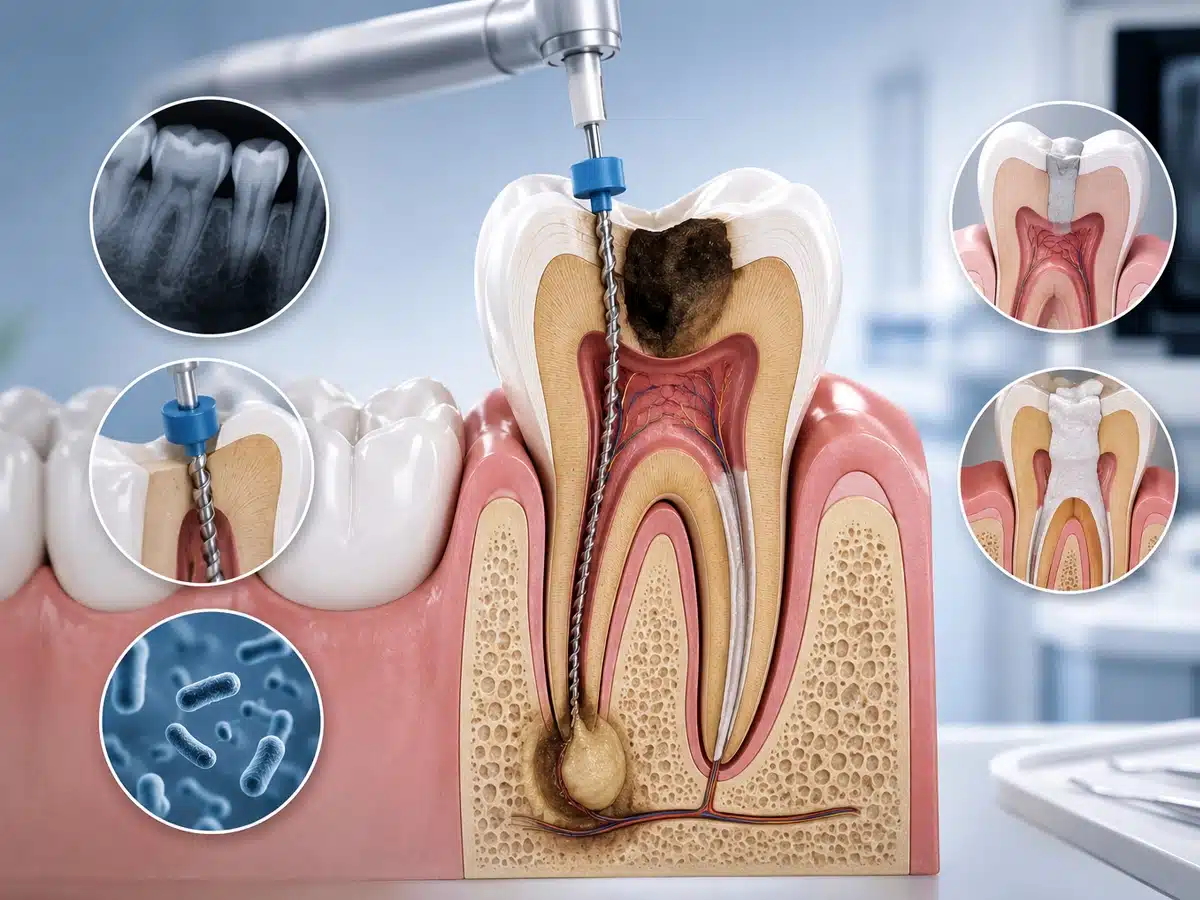
5 Signs You Need a Root Canal, Not Just a Filling
Tooth pain doesn't always mean the same thing. Here's how to tell whether you're looking at a simple filling or something that needs root canal treatment.
 Oral Care
How Often Should You Really Visit the Dentist?
"Every six months" is the standard advice — but is it right for everyone? Here's how to figure out the check-up schedule that actually fits you.
 Orthodontics
Braces vs Clear Aligners: Which Is Right for You?
Both straighten teeth effectively, but they suit different lifestyles, budgets, and cases. Here's how to compare them honestly.