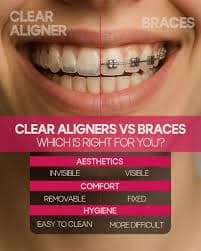
Traditional braces and clear aligners both work by applying steady pressure to gradually move teeth — the difference is mostly in how that pressure is delivered and how the treatment fits into daily life.
Braces are fixed to the teeth for the full treatment period, which makes them well suited to more complex bite corrections and doesn't rely on the wearer remembering to put anything on.
Clear aligners are removable, which many adults prefer for eating, brushing, and appearance, but that removability means results depend on actually wearing them for the recommended hours each day.
Cost is usually the other deciding factor — braces tend to be less expensive up front, while aligners typically cost more but offer a less visible option during treatment.
The right choice really comes down to the complexity of your case, your daily routine, and your budget — which is exactly what a consultation and set of X-rays are for.
Have a question about this?
Book a consultation and get answers specific to your situation.
Book AppointmentMore from the blog
 Treatments
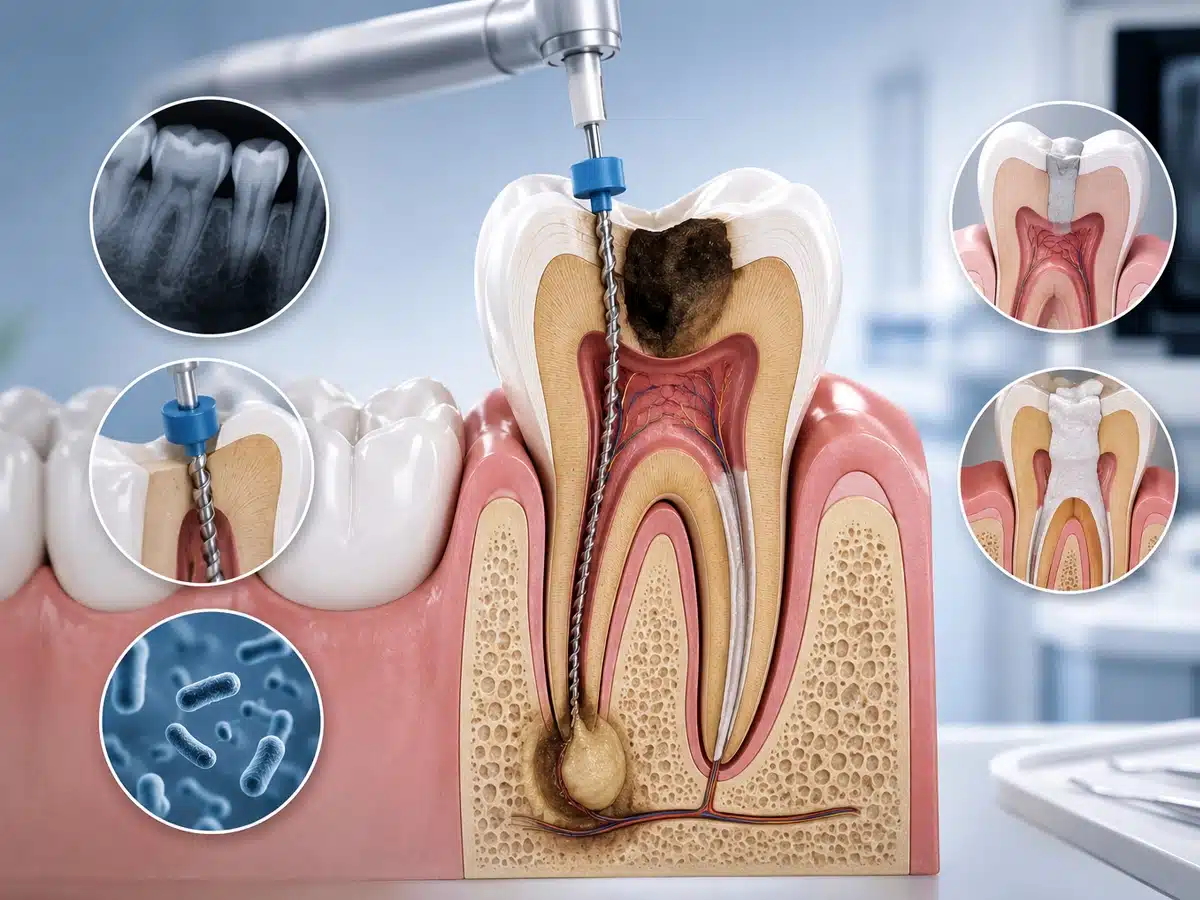
5 Signs You Need a Root Canal, Not Just a Filling
Tooth pain doesn't always mean the same thing. Here's how to tell whether you're looking at a simple filling or something that needs root canal treatment.
 Oral Care
How Often Should You Really Visit the Dentist?
"Every six months" is the standard advice — but is it right for everyone? Here's how to figure out the check-up schedule that actually fits you.
 Cosmetic
The Truth About Teeth Whitening: What Actually Works
From charcoal toothpaste to in-clinic treatments, whitening claims are everywhere. Here's what the evidence actually supports.